

The market
Why the euro has two prices in Algeria — and when each rate actually matters to you
The Bank of Algeria publishes a daily official rate. The Square Port-Saïd publishes a daily street rate. The gap between them is not noise — it is the price of access to foreign currency in a managed-exchange economy.
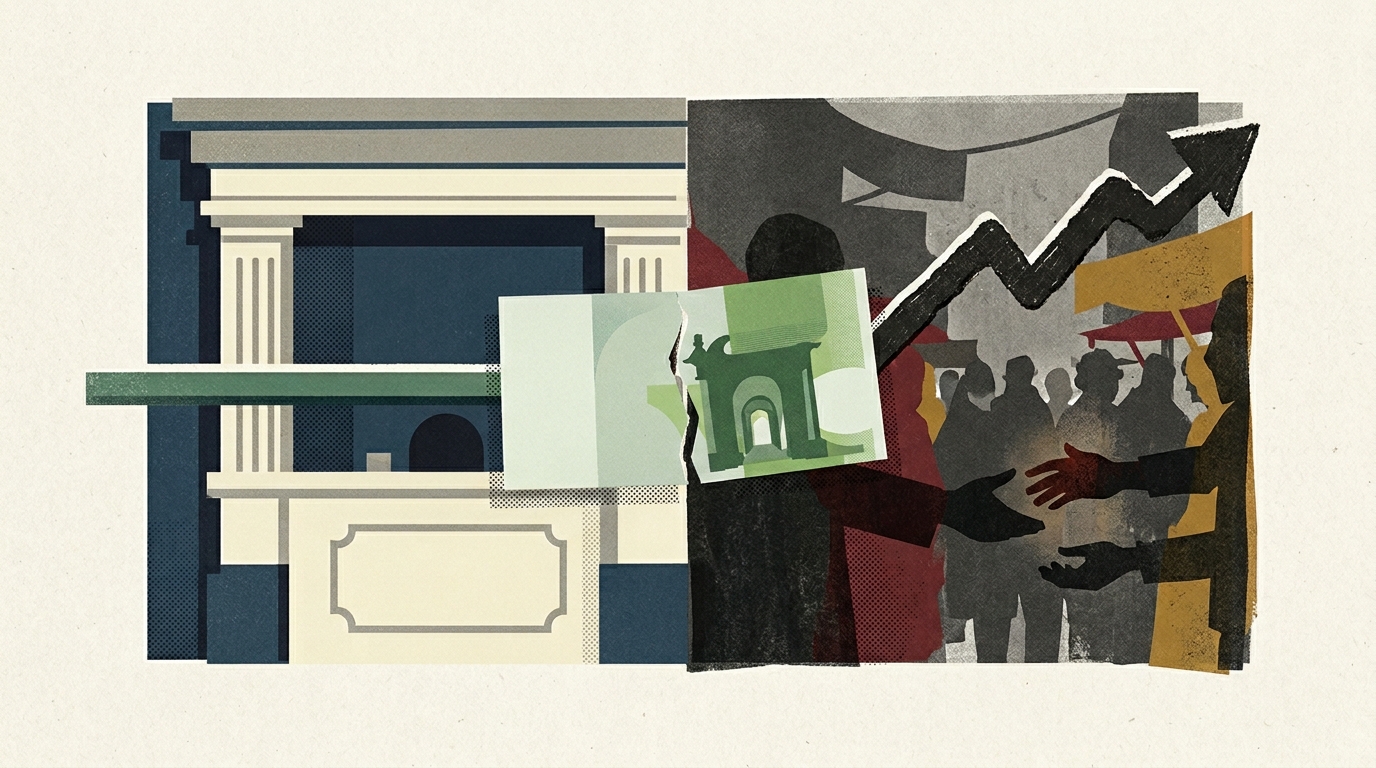
If you have ever asked an Algerian "how much is the euro?", you probably got two numbers in the same sentence: the official one and the real one. Both are real, but they describe two different things. Confusing them is one of the most common mistakes diaspora visitors and new arrivals make — and it can cost real money, in both directions.
01 The market
Two rates, two ecosystems
The official rate is set by the Bank of Algeria and used for bank-channel transactions: official trade, government imports, the small annual travel allowance, and reference accounting. The parallel rate — the "Square rate" — is the live price at which physical euros and dollars actually trade in Algeria. The same euro has both prices simultaneously, and which price you face depends entirely on the channel you use.
Official rate
Daily reference fixed by the Bank of Algeria. Applies inside the regulated banking channel and to administrative conversions.
Square rate
Live, in-person price for physical currency at Place Port-Saïd and its city equivalents. Applies to most household and informal flows.
Intermediate forms
Some bank-card flows, remittance providers and customs valuations sit between the two depending on the operation.
02 The market
How the spread has moved over time
The gap between the two rates has expanded and contracted with oil prices, balance-of-payments pressure, and policy changes around the dinar. Periods of strong hydrocarbon revenue compress the spread because foreign-exchange reserves can be used to defend the official rate. Periods of weaker oil revenue, large devaluations, or visible reserve drain widen it. Press coverage of dramatic euro spikes usually refers to the Square rate, not the official one.
“The spread is a thermometer. It moves with reserves, with policy, and with what households expect to happen to the dinar next.”
03 The market
Which rate applies to your situation
In practice, the rate you face depends on the channel. Use this as a mental cheat sheet — the boundaries are real but they can shift with policy.
- Diaspora arriving with cash and converting in-country → close to the Square rate.
- Bank transfer from Europe to a beneficiary in Algeria via a regulated provider → a rate close to the international interbank, with a provider margin.
- Algerian resident drawing the annual travel allowance from their bank → official rate, within the published cap.
- Importer with an official quota → official rate inside the quota; Square for any private top-up.
- Customs valuation of declared currency → official rate framework.
04 The market
Three myths worth correcting
A few persistent assumptions that lose people money.
Myth — the Square rate is "the real" rate
Both rates are real. They apply to different transactions. Treating the Square rate as the only valid price misjudges what a bank transfer or remittance provider can offer.
Myth — the official rate is "the fake" rate
The official rate prices real bank-channel flows every day — official trade, the travel allowance, customs valuation. It is the rate that governs your bank statement, not the rate that governs your living room.
Myth — there is one true number on a screen
There is the official daily reference (a single number) and the Square (a continuous market that moves all day). Both are legitimate snapshots of different facts.
05 The market
Where this goes next
The two-rate regime is structural, not accidental. It will narrow when foreign-exchange reserves are strong and policy leans toward convertibility; it will widen when reserves come under pressure or when private demand for hard currency is rising faster than official allocation can match. For households, the practical answer is to track both rates and pick the channel that fits the transaction — not to argue about which is the "right" one.
FAQ The market
Frequently asked
Which rate should I use to compare a remittance offer?
A regulated remittance provider (bank, Wise, Western Union) prices off the interbank rate with its own margin. Compare its quote with the international interbank, not with the Square — and compare the final amount received in dinars, not just the fee.
Why is the Square rate higher than the official rate?
Because the Square is where private foreign-exchange demand that does not fit into the official allocation system clears. The premium reflects the scarcity of legally accessible hard currency, not the intrinsic value of the dinar.
Is the official rate just a fiction?
No. It governs bank-channel transactions, official trade, the travel allowance, and customs valuations every day. Whether it represents the "true" market price of the dinar is a separate question.
Will Algeria ever have a single rate?
A unified rate would require either a meaningful devaluation of the official rate, a significant compression of private foreign-exchange demand, or full convertibility — each of which has costs. The trajectory has historically been gradual, not abrupt.
EXDZ publishes rates, historical context and comparison tools. We do not buy, sell or exchange currency. Verify the current official text on the Bank of Algeria website before any operation that requires it.