

Currency market
Square Port-Saïd in Algiers: how Algeria's parallel currency market works
It is not a bank or a licensed exchange office. Yet the Square is the informal reference Algerians quote when they discuss the euro, the dollar and the dinar.
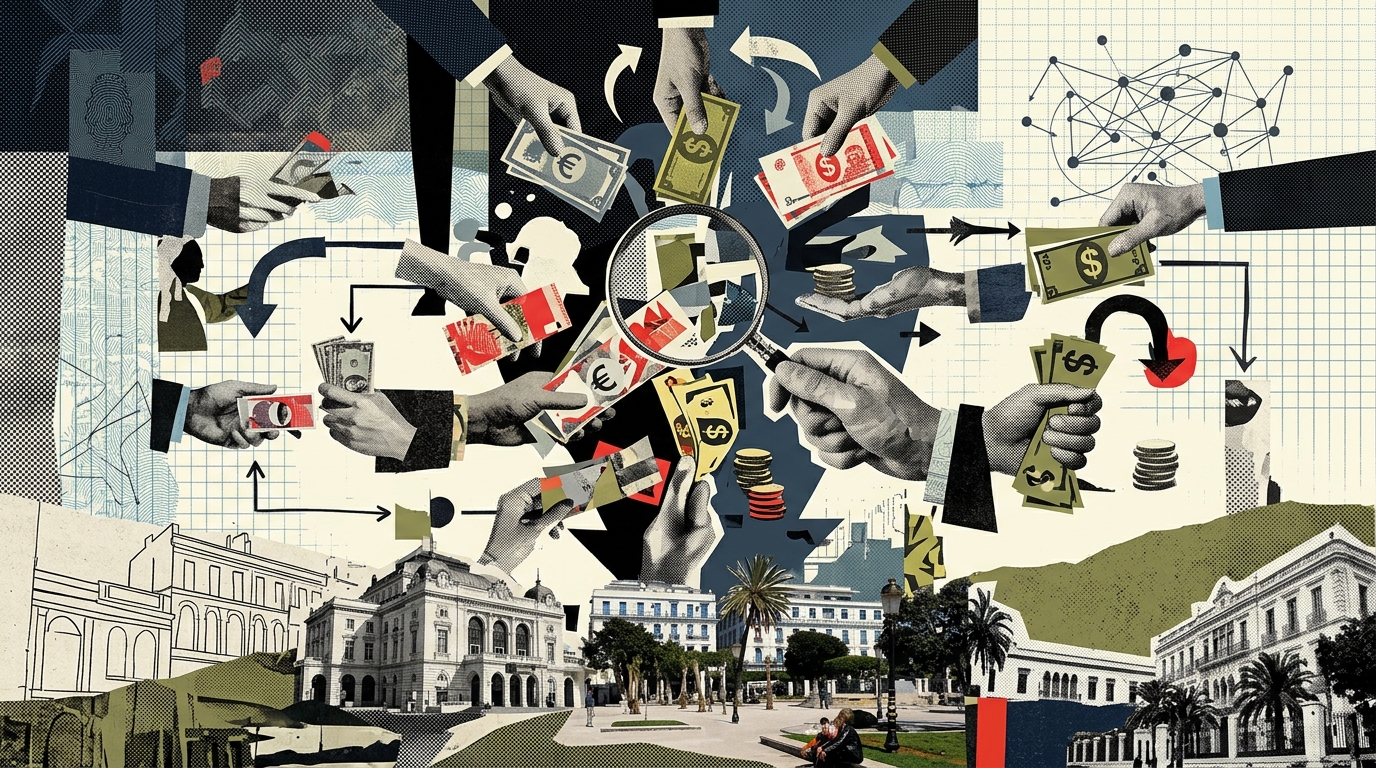
Behind the phrase “the Square” is a street-level market around Place Port-Saïd in central Algiers. Cash traders quote euros, US dollars and other currencies against the Algerian Dinar. Their prices are observed across the country because they reflect a real gap: demand for foreign currency extends beyond the needs served through regulated channels. This guide explains the mechanics as market context. It does not recommend using an unlicensed exchange channel.
01 Currency market
The Square does not exist because the dinar is fake
It exists because regulated channels do not satisfy every private demand for foreign currency. The Bank of Algeria publishes the Algerian Dinar rates from the interbank foreign-exchange market. Separately, the informal cash market reflects the price at which physical euros and dollars are exchanged outside licensed channels. The spread between those two reference points is the price of that gap. The official rate is real, and the observed Square rate is real. They describe different markets.
“The spread is not a second official rate. It is the visible price of demand that the regulated channel does not fully serve.”
02 Currency market
What Place Port-Saïd is, physically
Place Port-Saïd is in central lower Algiers, near the lower Casbah and the port-facing downtown area. The Square is not an enclosed market or a single counter. It is a cluster of individuals exchanging physical banknotes in and around a public space. Quotes are verbal or shown on a phone. There is no regulated order book, guaranteed price or standard receipt.
A cash market
The underlying object is physical currency: euros, dollars and other banknotes exchanged against dinars. That is different from a bank transfer or a regulated remittance quote.
Several quotes, not one counter
The phrase “Square rate” is shorthand for an observed market range. Individual quotes can differ by buy or sell direction, amount, denomination and moment of the day.
A reference beyond one square
Place Port-Saïd is the best-known reference point, but informal cash exchange is not confined to one plaza or one city.
03 Currency market
The legal reality: observed does not mean regulated
Algeria regulates foreign exchange. The current monetary and banking framework is built around Law No. 23-09 of 21 June 2023. The Bank of Algeria also publishes Regulation No. 23-01 of 21 September 2023 governing the authorization and operation of licensed exchange offices. Foreign-exchange and cross-border capital violations are addressed by the separate enforcement framework, including Ordinance No. 96-22 as amended. Street transactions at the Square should not be confused with an approved exchange office.
“EXDZ observes an informal market because readers need to understand the spread. Observation is not authorization, facilitation or legal advice.”
04 Currency market
What can move the Square rate from day to day
No public order book explains every move, and no single factor predicts tomorrow’s quote. The informal EUR-to-DZD and USD-to-DZD rates reflect a changing balance of physical cash supply, private demand and expectations. These are the recurring influences worth understanding.
Import and commercial demand
When demand for foreign currency cannot be met through regulated commercial channels, pressure can appear in the parallel market. Policy and documentation changes can affect that balance.
Diaspora cash flows
Periods when more visitors arrive with euros can add physical supply. Summer travel and family visits matter, but the effect is not guaranteed or identical every year.
Travel demand
The official travel right increased in July 2025: the Bank of Algeria documents EUR 750 for eligible adults and EUR 300 for qualifying minors, once per reference year. Private travel needs can still exceed the regulated amount.
Policy and confidence
Announcements about imports, reserves, public policy or the wider economy can change expectations. Oil-market conditions also matter because hydrocarbons remain central to Algeria’s external receipts.
05 Currency market
EUR vs USD: why the euro is the daily reference
Both currencies matter, but the euro is usually the most visible informal-market benchmark in Algeria. Europe is central to trade, travel and diaspora ties, so searches for the euro to Algerian Dinar exchange rate and the Square price are especially common. The USD to Algerian Dinar rate remains important for savings, Gulf-linked flows and dollar-denominated needs. GBP and CAD are useful secondary indicators for diaspora households.
- EUR/DZD — the most frequently quoted Square benchmark and the main EXDZ informal-rate reference.
- USD/DZD — a key secondary market with its own physical supply and demand.
- GBP/DZD and CAD/DZD — useful for UK- and Canada-linked transfers or cash comparisons.
- Buy and sell direction — always check which side of the market an observed quote represents.
06 Currency market
How an Algiers market becomes a national reference
Informal markets also exist outside Algiers. What gives Place Port-Saïd its prominence is visibility and perceived liquidity: its quotes are widely repeated by word of mouth, messaging apps, social networks and rate-tracking platforms. A quote in Oran, Constantine, Annaba or another city can differ because local supply and demand differ. EXDZ therefore treats the Square as an observation point and market reference, not as a guaranteed nationwide execution price.
07 Currency market
What the EXDZ Index measures
The EXDZ Index tracks the spread between observed informal rates and the official Bank of Algeria reference over time. It does not manufacture an exchange rate and it is not a transaction service. The value is context: readers can compare the current euro marché noir observation with the official EUR/DZD rate, follow the direction of the gap and place today’s quote against recent history.
Current context
Read the informal buy and sell observations beside the official reference instead of mixing them into one number.
Trend context
A widening or narrowing spread shows how the relationship between the observed cash market and official interbank reference is changing.
No promise of execution
An EXDZ observation is a market-data snapshot. It is not an offer, instruction or guarantee that any person will transact at that number.
08 Currency market
What readers should verify before making decisions
Use Square-rate data as information. For regulated exchange, transfers and cross-border cash, consult the relevant official rules and approved providers. Carrying foreign currency across Algeria’s border is subject to declaration and export rules that have changed in recent years, including Regulation No. 24-05 of 13 October 2024.
- Treat any online Square quote as an observation timestamp, not a guaranteed price.
- Do not confuse an informal cash quote with a bank, card or money-transfer quote.
- For physical cash at the border, verify the current declaration and supporting-document rules before travel.
- For family transfers, compare regulated providers by the final DZD received and the available payout method.
“Use the Square observation to understand the market gap. Use official sources to decide what is permitted.”
FAQ Currency market
Frequently asked
What is the difference between the Square rate and the official rate?
The Bank of Algeria publishes rates from the regulated interbank foreign-exchange market. The Square rate is an observed informal cash-market quote. EXDZ shows both because the spread is useful context, but they are not interchangeable channels.
Where can I check the EUR or USD Square rate today?
Use the EXDZ EUR-to-DZD and USD-to-DZD pages to compare informal buy and sell observations with the official reference. The displayed figures are snapshots, not guaranteed transaction prices.
Where exactly is Square Port-Saïd?
Place Port-Saïd is in central lower Algiers, near the lower Casbah and the port-facing downtown area. “The Square” refers to informal cash-exchange activity around the public space, not a regulated building.
Are Square exchange transactions a licensed exchange channel?
No. Algeria regulates foreign exchange and licensed exchange offices. Do not confuse street activity with an approved exchange office. Review current rules or obtain legal advice for your situation.
What is the official Algeria travel-currency right?
The Bank of Algeria’s Instruction No. 05-2025 took effect on 20 July 2025. Its public guidance states EUR 750 for eligible resident adults and EUR 300 for qualifying minors, once per reference year. Verify the current eligibility, documents and collection steps directly with the Bank of Algeria.
EXDZ publishes observational market data and educational comparisons. EXDZ does not exchange currency, intermediate transactions or operate at Square Port-Saïd. Unlicensed exchange is not a regulated channel. Review current Algerian law and customs rules before making decisions involving cash or foreign currency.
Official references
Use the current official texts for regulated rates, exchange offices, travel currency and cross-border cash rules.
- Bank of Algeria — official Dinar exchange rates
- Bank of Algeria — interbank foreign-exchange market
- Bank of Algeria — monetary and banking framework
- Bank of Algeria — Regulation No. 23-01 on licensed exchange offices
- Bank of Algeria — travel-currency right guidance
- Bank of Algeria — foreign-exchange regulations
- JORADP — Ordinance No. 96-22 on foreign-exchange violations